In recent years, companies in the construction and manufacturing industries have been creating an increasing number of 3D models based on CAD and BIM data. However, sharing and utilizing these models remains challenging due to the need for specialized software, data compatibility issues, and technical barriers for non-technical users.
As a result, collaboration between departments can become less efficient, slowing down decision-making processes and impacting project schedules. This is why more and more organizations are looking for ways to view and interact with 3D models directly through a web browser.

Learn more: WHAT IS WEB 3D? AN EFFICIENT SOLUTION FOR SHARING 3D MODELS AND DATA (PART 2)
Web 3D is a technology that enables users to view and interact with 3D models directly in a web browser, eliminating the need for local workstations or specialized software. CAD and BIM data can be converted and stored in the cloud, allowing users to access, review, and share models through a simple URL.
Traditionally, sharing 3D models required sending large files and ensuring that recipients had the appropriate software environment to open them. This often made information exchange time-consuming and inefficient. With Web 3D, users only need to share a link, allowing stakeholders to access the same model instantly and collaborate more effectively.
| Category | Traditional Approach | With Web 3D |
|---|---|---|
| Model Viewing | Requires specialized software | Accessible directly in a web browser |
| Data Sharing | Primarily file-based | Shared via URL |
| Users | Mainly engineers and technical specialists | Accessible to all stakeholders |
| Review Process | Requires software setup and preparation | Can start immediately |
As a result, not only technical teams but also clients, managers, and other stakeholders can easily access and understand 3D models. Web 3D is more than just a visualization technology—it is a new way for organizations to improve data sharing, collaboration, and decision-making throughout a project lifecycle.
Learn more: VinaCAD Web

The ability to view 3D models directly in a web browser is one of the key advantages of Web 3D. In the past, users typically needed to install specialized software to open and interact with 3D models. Today, with a compatible browser and an internet connection, users can easily access and view 3D data from virtually anywhere.
Thanks to platforms such as Autodesk Viewer, BIMx Viewer, and Sketchfab, reviewing and sharing 3D models has become much easier without the need for a complex technical setup.
This enables stakeholders to quickly access project information and supports more efficient design, construction, and project management processes.
Another major benefit of Web 3D is the ability to share models via URLs. Instead of sending large files or managing multiple file versions, users can simply share a link that provides access to a single source of truth.
As a result, stakeholders can review the same 3D model at the same time, reducing miscommunication and improving collaboration.
In addition, organizations can easily share models with clients, making it easier to present design concepts, collect feedback, and confirm project details remotely.
Traditionally, 3D models were primarily used by engineers and CAD/BIM specialists. Working with these models often required technical expertise, making them difficult for non-technical users to access.
With Web 3D, users can view and interact with 3D models directly through a web browser using intuitive and user-friendly interfaces. This significantly lowers the barrier to entry and makes 3D data more accessible.
As a result, information can be shared more effectively across departments, enabling everyone involved in a project—from engineers and project managers to clients and other stakeholders—to make better use of 3D data throughout the project lifecycle.
Learn more: VinaCAD Platform | Desktop - Cloud - Web - Smartphone
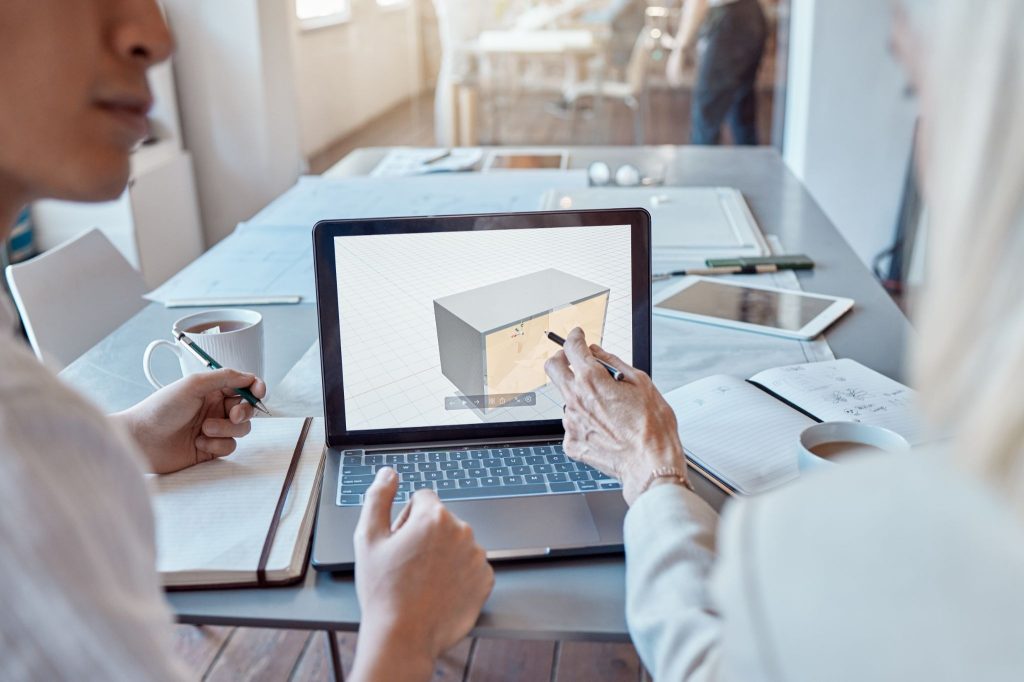
Web 3D goes far beyond simply viewing and sharing 3D models in a browser. In practice, it supports design reviews, collaboration, system integration, and helps improve efficiency across the entire project lifecycle.
Common applications of Web 3D include:
When integrated into web applications and business workflows, 3D data becomes more than just a reference resource. It becomes part of a company's Digital Transformation (DX) strategy, enabling faster information sharing, better decision-making, and improved collaboration among stakeholders.
The first step in adopting Web 3D is enabling users to view and share 3D models directly in a web browser. Platforms such as Autodesk Viewer, BIMx, and Sketchfab allow users to upload CAD/BIM data and generate links for sharing.
This enables project teams, contractors, and external partners to access the same model without installing specialized software. It is particularly valuable for remote meetings, construction sites, and other environments where quick access to information is essential.
Sharing models through URLs also helps shorten approval cycles and reduce errors caused by working with outdated file versions.
Web 3D allows multiple stakeholders to review the same model and communicate directly through comments, annotations, and markups.
Instead of relying on emails or trying to explain issues through 2D drawings, users can identify and highlight specific locations directly within the 3D model, making communication more visual and easier to understand.
This not only improves the efficiency of the review process but also helps teams align on decisions more quickly, reducing meeting time and minimizing implementation errors.
In addition, a more intuitive review environment enables non-technical participants to contribute feedback more effectively, leading to higher design quality and fewer revisions later in the project.
Web 3D is not limited to model viewing. Through APIs and Software Development Kits (SDKs), organizations can integrate 3D viewers directly into project management systems, CDE platforms, and internal business applications.
This allows users to access 3D models within their familiar work environment while performing tasks such as viewing model information, measuring dimensions, adding notes, and tracking project progress.
Combined with access control and permission management, organizations can securely manage data sharing across departments, partners, and clients.
In the long term, Web 3D can also serve as a data visualization platform for asset management, facility operations, and lifecycle management of buildings and infrastructure.
Web 3D not only enables the visualization of 3D models in a web browser, but also creates new opportunities for data sharing, collaboration, and project decision-making. With its ease of access, fast sharing capabilities, and support for a wide range of users, Web 3D is becoming an essential tool for organizations looking to improve productivity and accelerate their digital transformation journey.
Are you facing challenges in implementing BIM,CAD, Revit, CDE, or any other BIM-related technologies and workflows for your project?
Don't worry—BIMCAD Vietnam is here to support you every step of the way!