As urbanization continues to accelerate worldwide, the concept of Smart Cities has emerged as a key approach to creating modern, sustainable, and efficient urban environments. To achieve this vision, Building Information Modeling (BIM) plays a critical role as a foundational technology, enabling data integration, optimizing urban planning and infrastructure management, and improving decision-making throughout the entire lifecycle of buildings and city assets.
Beyond supporting design and construction, BIM provides a collaborative digital environment where stakeholders can share information in real time, ensuring seamless coordination across planning, construction, operation, and maintenance processes. As a result, BIM has become one of the core enablers of digital transformation, helping cities evolve into smarter and more sustainable communities for the future.

Smart cities are built on interconnected systems that rely on data for efficient operation, ranging from transportation and utilities to public services and energy grids. BIM facilitates the seamless integration of these systems by providing a centralized digital model that acts as a single source of truth. This model enables stakeholders, including architects, engineers, and urban planners, to collaborate and visualize the entire lifecycle of urban infrastructure, from design to operation and maintenance.
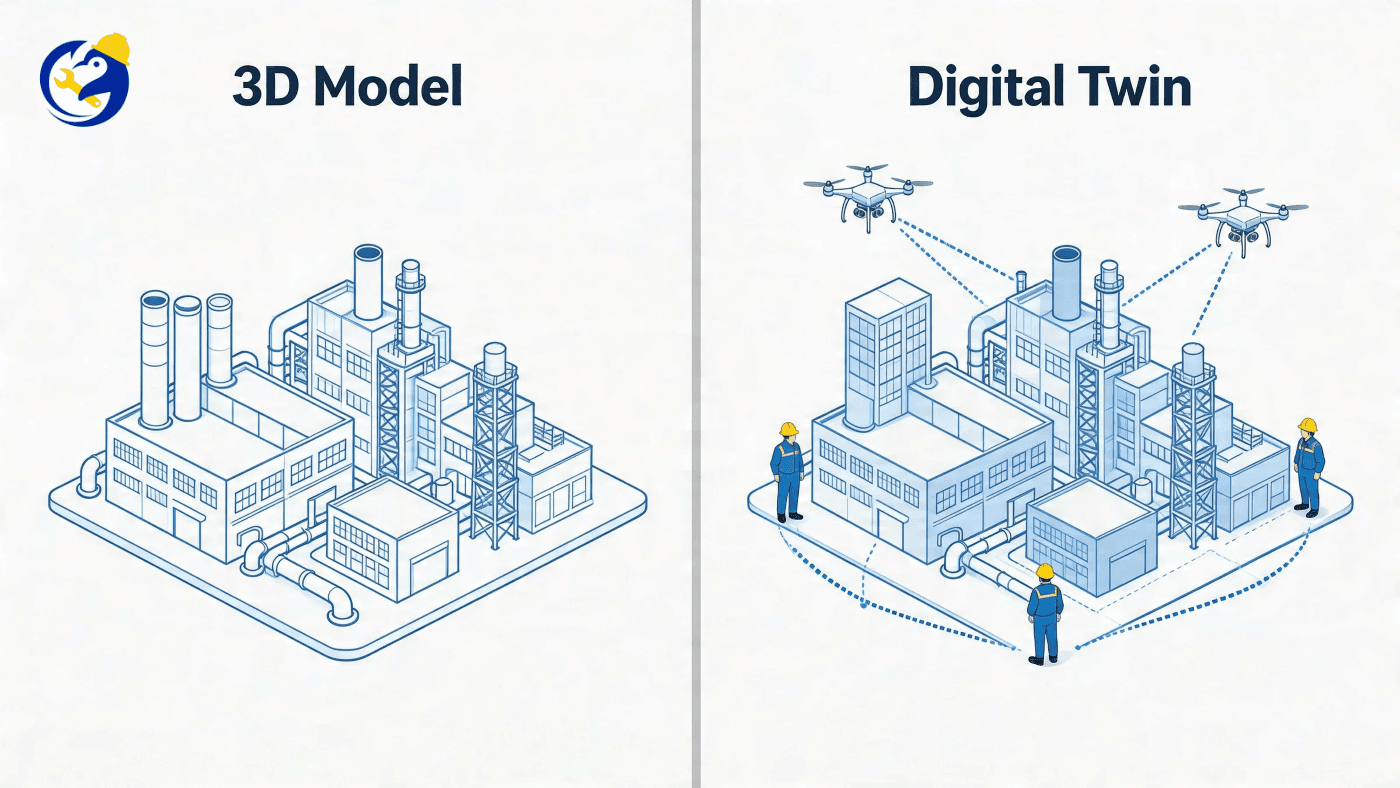
BIM serves as the foundation for creating Digital Twins—real-time digital representations of physical buildings and infrastructure. Digital Twins enable city managers to simulate various operational scenarios, predict potential risks, and optimize the management of urban assets throughout their lifecycle.
Beyond traditional 3D modeling, BIM enhances project management through additional dimensions of data:
As a result, urban development projects can be delivered with greater accuracy in terms of schedule, cost, and environmental performance.
BIM acts as a central platform for integrating data from various systems, including IoT (Internet of Things) and GIS (Geographic Information System). This integration enables real-time data collection, monitoring, and management, supporting faster and more informed operational decision-making.
One of BIM’s most significant advantages is its ability to support the design and evaluation of sustainable solutions. BIM helps organizations:
By enabling these capabilities, BIM has become a key technology for helping cities become greener, smarter, and more sustainable in the long term.

In the context of smart city development, LOD (Level of Development) standards are crucial for defining the accuracy and detail required at various stages of a project. The most commonly used LOD standards for smart cities are:

Smart cities require efficient transportation networks to reduce congestion and minimize environmental impact. BIM supports the development of Intelligent Transportation Systems (ITS) by:
Example: The Smart Mobility initiative in Barcelona integrates BIM with IoT and AI technologies to improve public transportation management and reduce traffic congestion.
Despite its many benefits, the adoption of BIM in Smart City projects still faces several challenges:
However, with the advancement of Open BIM standards such as IFC (Industry Foundation Classes) and the growing adoption of cloud-based platforms, these barriers are gradually being overcome. Collaboration among government agencies, project owners, and technology providers will be essential to accelerating BIM adoption and driving the development of smarter, more connected urban environments.
Learn more: What is IFC in BIM?
BIM is becoming a critical foundation for the development and operation of Smart Cities. From planning and design to construction and facility management, BIM enables data integration, improves collaboration among stakeholders, and optimizes the performance of urban infrastructure. When combined with technologies such as Digital Twin, IoT, GIS, and AI, BIM not only enhances city management but also supports long-term sustainable urban development.
BIMCAD Vietnam provides BIM and digital transformation solutions that help organizations optimize project management, operations, and infrastructure development processes in alignment with Smart City initiatives.