Why is BIM document management important?
In a BIM project, hundreds or even thousands of documents are generated every day, including drawings, BIM models, and technical documentation. Without a clear management process, businesses can easily face issues such as version confusion, data loss, delays, and construction errors.
That’s why BIM document control serves as the backbone of any successful project.

This stage involves architects, structural and MEP engineers, as well as BIM modelers who are responsible for creating and collecting project documents. These typically include CAD files (DWG), BIM models (RVT, IFC), and various documents such as PDFs, Excel files, and technical reports.
However, common issues often arise at this stage, such as inconsistent file naming conventions and fragmented storage, which can lead to confusion and inefficiencies later in the project.
All project documents should be uploaded to a centralized system, typically a Common Data Environment (CDE). Within this environment, files are organized according to a clear project structure, access permissions are well-defined, and users can access information anytime, anywhere.
If your team is still relying on tools like email or Google Drive, it likely means you don’t yet have a true document management workflow in place.

Learn more: An Introduction to CDE
At this stage, documents go through technical checks, clash detection, and direct commenting on the files. It is essential that all feedback is properly recorded and traceable within the system, rather than being scattered across chats or emails, to ensure transparency and effective collaboration.
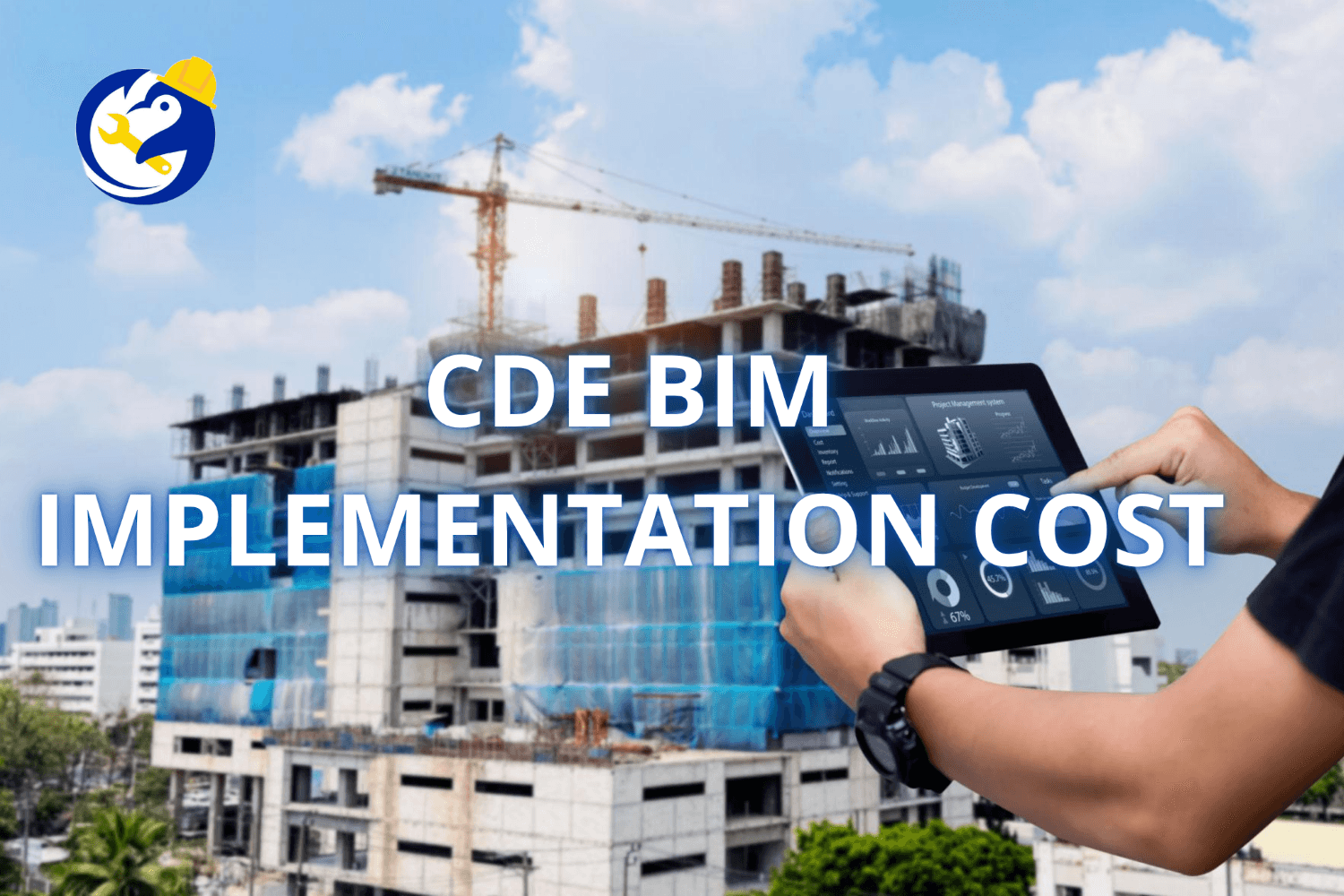
Learn more: CDE Implementation Cost 2026
After the review stage, documents are either approved, sent back for revision, or rejected. An effective workflow should be automated, allow clear status tracking, and maintain a complete audit log of all actions. This is also the stage where manual systems most commonly fail, leading to confusion and lack of control.
Once approved, documents are issued to relevant stakeholders such as contractors, site teams, and project owners. It is essential to ensure that only the latest versions are used and to avoid manual file sharing, which can easily lead to errors and outdated information being circulated.
In the final stage, all project documents and their history are securely archived, allowing easy retrieval whenever needed and supporting facility management (FM) operations. The greatest value lies in ensuring that data is never lost and can be effectively reused for future purposes.


Many projects face challenges in BIM document management due to fundamental issues in how information is handled from the beginning. A lack of clearly defined processes often leads to inconsistent ways of working across teams, making it difficult to maintain control. Without proper version control, teams may unknowingly use outdated drawings or models, resulting in coordination errors.
Another common problem is relying on fragmented communication channels such as email for reviews and feedback, which makes information hard to track and easy to lose. In addition, the absence of a structured workflow means there is no clear path for documents to move from creation to approval, causing delays and confusion. Not maintaining a proper log or audit trail further reduces transparency, making it difficult to trace decisions or responsibilities.
As a result, these issues can lead to construction mistakes, disputes between stakeholders, and ultimately increased project costs and inefficiencies.
Learn more: 7 Common Mistakes in Construction Project Data Management
In reality, the document management process described above cannot operate efficiently when handled manually, especially in complex BIM projects with large volumes of data and multiple stakeholders. This is why a Common Data Environment (CDE) has become a critical foundation for modern project delivery.
A CDE platform centralizes all project information in one place, automates version control and approval workflows, and ensures that every action is tracked and traceable. It also enables teams to access, review, and collaborate on documents and BIM models in real time, regardless of location.
In other words, CDE transforms document management from a theoretical framework into a practical, scalable system that can be consistently applied across projects.

Learn more: VinaCDE – A Comprehensive Construction Project Management Platform

If you’re still managing files through email or cloud drives, struggling to find documents, or frequently dealing with version issues, it’s a clear sign that your process needs improvement.
Start by standardizing your workflows, organizing your data structure, and implementing a CDE platform to bring everything under control.
BIM document management is not just about storing files — it is about managing the entire flow of project information from creation to approval and delivery.
A well-structured and properly implemented process helps reduce errors, improve project speed, enhance transparency between stakeholders, and optimize overall costs. More importantly, it creates a solid foundation for better decision-making and more efficient project execution.
If you are interested in implementing BIM or building an effective CDE environment for your company, let the BIMCAD Vietnam team assist you. We provide solutions ranging from strategic consulting and software implementation to training and system operation.