The rapid evolution of Smart Buildings is driven not by a single software application or device, but by the integration of multiple advanced technologies. Working together, these technologies enable buildings to automatically collect data, analyze information, make intelligent decisions, and optimize operations in real time.
So, which technologies form the foundation of a Smart Building? In this article, we'll explore the four core technologies that are powering today's intelligent buildings.

Learn more: What Is a Smart Building? Benefits and Challenges of Smart Buildings
IoT (Internet of Things) is a technology that enables devices to connect to the internet, allowing them to collect, exchange, and process data.
In everyday life, IoT is widely used in devices such as smartwatches, smart TVs, smart speakers, and internet-connected home appliances.
In Smart Buildings, IoT connects building systems—including HVAC, lighting, elevators, sensors, and security systems—to a centralized management platform. This enables facility managers to monitor, control, and operate building systems remotely, improving operational efficiency while reducing management costs.
AI (Artificial Intelligence) enables computers to learn from data, analyze information, and make decisions in ways that resemble human intelligence.
Within a Smart Building, AI continuously collects and analyzes data 24/7 to:
By leveraging AI, building operations become more intelligent, automated, and efficient.
5G (Fifth-Generation Mobile Network) is the latest generation of mobile communication technology, offering three major advantages:
5G provides the high-performance network infrastructure that enables IoT devices and AI applications to operate seamlessly in Smart Buildings.
For example, with 5G connectivity, autonomous robots can be controlled in real time to perform tasks such as:
These capabilities reduce labor requirements, increase automation, and improve overall operational efficiency.
A Building Energy Management System (BEMS) is a platform designed to monitor, analyze, and optimize energy consumption in office buildings and commercial facilities.
A BEMS can:
When integrated with IoT and AI, a BEMS becomes even more powerful by making intelligent, data-driven decisions that balance occupant comfort with energy efficiency. This helps organizations reduce operating costs while supporting the development of greener, more sustainable buildings.
In addition to the four core technologies above, Digital Twin is rapidly emerging as a key innovation in smart building management.
A Digital Twin creates a virtual replica of a physical building and continuously synchronizes it with real-time data collected from IoT devices. This allows facility managers to monitor the entire building through an interactive 3D model, including equipment locations, operational status, and real-time alerts for potential issues.
When combined with AI and IoT, a Digital Twin enables organizations to:
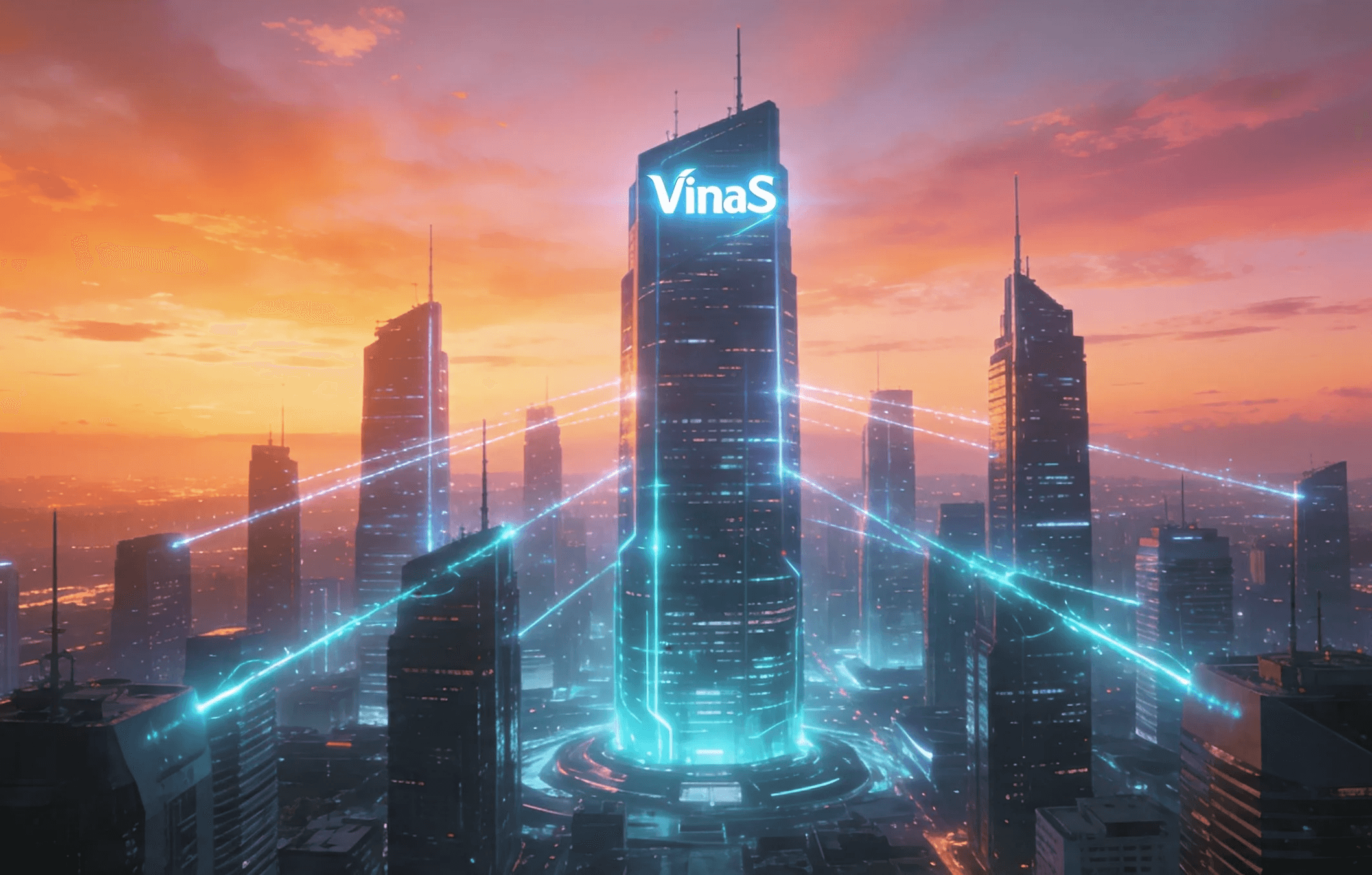
To fully unlock the potential of technologies such as IoT, AI, 5G, BEMS, and Digital Twin, organizations need a centralized platform that brings all building data and systems together.
VinaS is a Smart Building & Digital Twin Platform that integrates data from BIM, IoT, BMS, BEMS, and other building management systems into a single, intuitive interface.
With VinaS, organizations can:
Learn more: What Is a Smart Building? Benefits and Challenges of Smart Buildings
A Smart Building is not powered by a single technology but by the integration of IoT, AI, 5G, BEMS, and Digital Twin. Each technology plays a distinct role—from collecting real-time data and enabling intelligent analytics to optimizing operations and improving energy management.
Choosing the right technologies and a unified management platform enables organizations to build smarter, more energy-efficient, and more sustainable buildings while preparing for the ongoing digital transformation of the construction and facility management industries.
BIMCAD Vietnam provides BIM, Digital Twin, and Smart Building solutions that help organizations digitize building data, integrate IoT systems, visualize operations through interactive 3D models, and improve building management efficiency throughout the entire asset lifecycle.