Artificial Intelligence (AI) is driving significant changes across many industries, and the construction sector is no exception. When combined with BIM (Building Information Modeling), AI not only helps automate repetitive tasks but also enables a new way of working, where project data can be leveraged more effectively throughout the entire project lifecycle.

Learn more: AI-ASSISTED MODELING IN REVIT
Traditionally, BIM has primarily served as a platform for building modeling and project data management. However, with the support of AI, many time-consuming tasks can now be automated, including:
As a result, engineers and designers can spend less time on repetitive manual tasks and focus more on high-value activities that require technical expertise, problem-solving, and creativity.


Discover how the integration of BIM and AI is transforming workflows across the entire project lifecycle, from design development to construction management and facility operations.
The value of integrating AI into BIM goes far beyond automating simple tasks. When combined with BIM data, AI can assist with model validation, identify potential conflicts and deviations, and analyze project information to generate more optimized recommendations.
As a result, project teams can reduce the time spent on manual processes, improve coordination among stakeholders, and enhance efficiency throughout the design and construction phases.
The benefits of AI are not limited to design and construction. AI also enables organizations to maximize the value of BIM data throughout the entire building lifecycle.
By analyzing operational data, AI can support risk prediction, energy optimization, and predictive maintenance strategies. This allows organizations to transform BIM data into a powerful decision-making resource, improving facility management and operational performance over the long term.
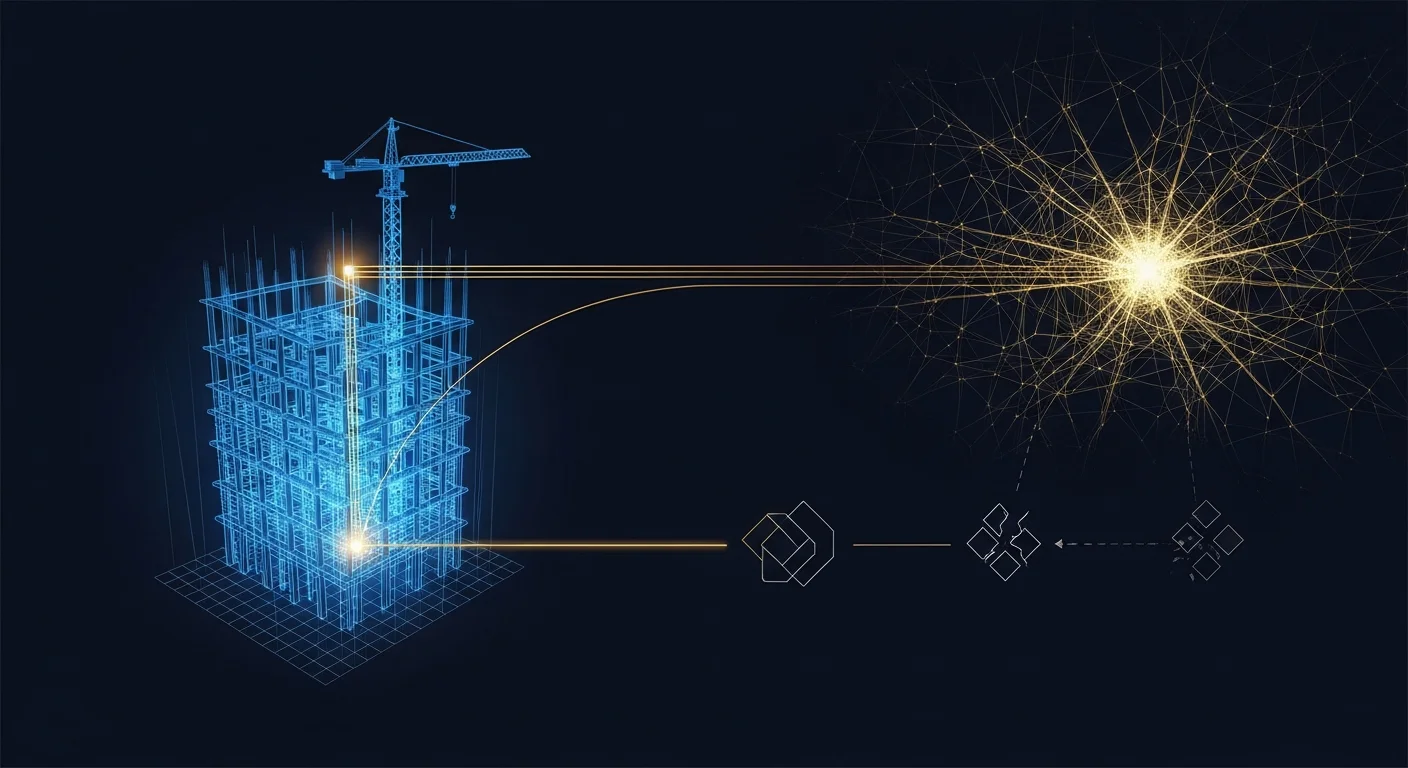
One of the most significant trends in recent years is the emergence of AI Agents capable of understanding context and executing complex workflows, rather than simply responding to individual commands.
For example:
This represents a major advancement in making BIM more accessible, intelligent, and efficient for the entire project team, helping organizations unlock greater value from their project data and workflows.
To maximize the value of AI, organizations need more than just intelligent tools—they also need a centralized, accurate, and consistent source of project data. This is where a Common Data Environment (CDE) plays a critical role by connecting all project information within a unified digital platform.
With VinaCDE, BIM models, drawings, documents, issues, and communication records are managed in a centralized environment, enabling project stakeholders to access, share, and collaborate using a single source of truth. This not only improves collaboration efficiency but also provides a solid foundation for AI-powered applications such as project data analysis, automated information validation, decision support, and workflow optimization.
When BIM, AI, and CDE are connected, project data evolves from isolated files into a valuable digital asset. This empowers organizations to increase productivity, reduce errors, and accelerate digital transformation across the construction lifecycle.

Learn more: VinaCDE
BIM has helped the construction industry digitize project information, while AI is unlocking the value hidden within that data.
The integration of BIM and AI is no longer just a technology trend—it has become a key driver for improving productivity, reducing errors, and optimizing project workflows. Organizations that successfully leverage BIM data together with AI will gain a significant advantage in managing, operating, and delivering construction projects more effectively.
Are you facing challenges in implementing BIM, Revit, CDE, or other BIM-related technologies and engineering solutions for your projects?
BIMCAD Vietnam is here to help. Our team is ready to support you with practical solutions and industry expertise to accelerate your digital transformation journey.